


Copper Product Enquiry Checklist: Quantity, Application And Delivery
Copper Product Enquiry Guide: Quantity, Usage & Delivery Requirements
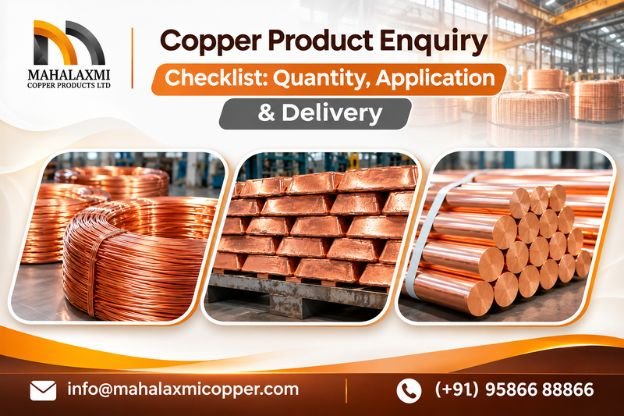
Finding the right Copper Supplier in India is an important step for businesses that depend on copper for manufacturing, electrical components and industrial operations. However, choosing a supplier is only one part of the purchasing process. Providing accurate product requirements is equally important to receive a suitable quotation and avoid unnecessary delays.
Whether you need copper wire, CCR copper rods, copper bars, copper ingots or copper scrap, your enquiry should clearly explain what you need. Details such as product type, quantity, application, technical specifications and delivery location help suppliers understand your requirements.
At Mahalaxmi Copper Products Ltd., Ahmedabad, Gujarat, we understand that every industrial buyer has different material requirements. Therefore, this guide explains what to include when preparing a copper product enquiry.
1. Identify the Right Copper Product
Before contacting a supplier, identify the exact copper product required for your business. Copper products are available in different forms, and each serves specific industrial purposes
For example:
- Copper Wire: Used in electrical wiring, cables, winding applications and various electrical components.
- CCR Copper Rods: Used as raw material for copper wire drawing and electrical conductor manufacturing.
- Copper Bars: Suitable for electrical connections, busbar-related requirements, fabrication and industrial applications.
- Copper Ingots: Used as raw material in metal processing, casting and further manufacturing operations.
- Copper Scrap: Used by recyclers and metal processors as secondary raw material, subject to material grade and condition.
Selecting the correct product helps a copper supplier understand your requirement from the beginning. Moreover, it reduces confusion during quotation and order processing.
2. Mention the Required Quantity Clearly
Quantity is one of the most important details in a copper product enquiry. Suppliers need to understand how much material you require before discussing pricing and supply arrangements.
For example, instead of writing that you need copper rods in bulk, specify whether your requirement is 500 KG, 2 MT or another quantity.
Furthermore, mention whether the requirement is:
- A one-time purchase.
- A monthly or recurring requirement.
- A regular bulk supply arrangement.
- A small trial order before placing a larger order.
This information helps suppliers evaluate your purchasing requirements and discuss suitable commercial terms.
3. Explain the Industrial Application
The intended application plays an important role in selecting the right copper material. Different industries require different product forms, dimensions and material specifications.
For example, a transformer manufacturer may require copper material for winding applications, while an electrical equipment manufacturer may need copper bars for conducting electricity.
When sending an enquiry, briefly explain:
- Which industry you operate in.
- What product you manufacture.
- Where the copper material will be used.
- Whether the material is required for production, fabrication or further processing.
A clear application description helps suppliers understand the purpose of the material and discuss relevant product requirements.
4. Share Technical Specifications and Quality Requirements
Product specifications should never be overlooked when purchasing industrial copper. Even when two buyers request the same copper product, their technical requirements may differ.
Depending on the product, include details such as:
- Copper grade and purity requirements.
- Diameter, thickness, width or length.
- Required shape and form.
- Temper or material condition, where applicable.
- Applicable IS, ASTM or other industry standards, if specified.
- Testing reports or material certificates, if required.
For example, a buyer purchasing copper bars should mention the required dimensions instead of simply asking for copper bars.
5. Confirm the Delivery Location and Timeline
Delivery information is another essential part of a complete copper enquiry. The same product and quantity may involve different transportation arrangements depending on the destination.
You should also clarify:
- Whether delivery is required at your factory or warehouse.
- Your preferred delivery date.
- Whether the material is required urgently.
- Any special packaging or handling requirements.
- Whether unloading arrangements are available at your location.
For example, a buyer located in Ahmedabad may have different transportation requirements compared with a manufacturer ordering copper material in another state.
Therefore, sharing the delivery location at the beginning helps suppliers discuss transportation costs, dispatch arrangements and estimated delivery schedules more effectively.
6. Discuss Pricing, Documentation and Payment Terms
Copper pricing can vary depending on material specifications, quantity, market-linked pricing arrangements and other commercial factors. Consequently, buyers should understand what the quotation includes before confirming an order.
Ask about the following:
- Product price and applicable GST.
- Transportation and delivery charges.
- Minimum order quantity, if applicable.
- Payment terms and advance requirements.
- Quotation validity.
- Availability of inspection reports or material certificates, where required.
Moreover, always compare quotations based on the same product specifications. A lower price does not necessarily represent better value if the material grade, dimensions or delivery terms are different.
7. Common Mistakes to Avoid When Sending a Copper Enquiry
Many industrial buyers receive incomplete quotations simply because their initial enquiries lack important information.
Here are some mistakes worth avoiding:
Not mentioning the exact product: Avoid general enquiries such as requesting copper material without identifying its form.
Providing unclear quantities: Always mention the quantity in KG or MT instead of using vague terms like bulk.
Ignoring technical specifications: Missing dimensions, grades or required standards can lead to incorrect quotations.
Not explaining the application: The supplier may need additional information to understand the intended use.
Forgetting delivery details: Without a delivery location, transportation costs and timelines cannot be discussed accurately.
Preparing a complete enquiry from the beginning can make supplier communication more efficient and help businesses plan their procurement better.
Conclusion
A well-prepared copper product enquiry saves time and makes industrial purchasing more straightforward. Before contacting a supplier, ensure that you have identified the correct product, specified the required quantity, explained its application, shared technical details and confirmed the delivery location.
If you are looking for a reliable Copper Supplier in India, Mahalaxmi Copper Products Ltd. in Ahmedabad, Gujarat, handles enquiries for copper wire, CCR copper rods, copper bars, copper ingots and copper scrap for industrial and electrical requirements.
Contact Mahalaxmi Copper to discuss your copper product requirements and share the details needed for your next enquiry.
Frequently Asked Questions
1. What details should I include in a copper product enquiry?
Include the required copper product, quantity, intended application, technical specifications and delivery location. You should also mention any specific quality standards, drawings, testing requirements or commercial preferences. Providing these details helps suppliers understand your requirements and prepare a more relevant quotation.
2. How do I choose the right copper supplier in India?
Look for a supplier that handles your required copper product and can discuss its technical specifications, quantity and delivery requirements. Also, review the supplier’s product range, communication, documentation availability and commercial terms before placing an order.
3. Which copper products are commonly used in industrial applications?
Common industrial copper products include copper wire, CCR copper rods, copper bars, copper ingots and copper scrap. Manufacturers select different forms according to their production processes, electrical requirements and material specifications.
4. Why is quantity important when requesting a copper quotation?
Quantity helps suppliers evaluate the order requirement and discuss suitable pricing and supply arrangements. Always mention the quantity in kilograms or metric tonnes. Also, clarify whether you need a one-time order or regular material supply.
5. Does delivery location affect copper product quotations?
Yes. Delivery location can influence transportation charges, dispatch planning and estimated delivery timelines. Therefore, buyers should provide the complete delivery address, including the city, state and PIN code, when requesting a copper product quotation.
