


Copper Bar Buying Guide for Electrical Panels & Earthing in Ahmedabad
Introduction to Copper Bars for Electrical Panels & Earthing
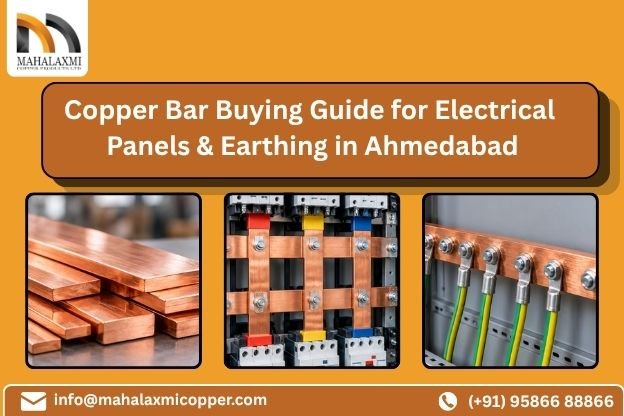
Choosing the right Copper Bar for Electrical Panels is important for safe power distribution, reliable connections, and long-term equipment performance. For panel builders and electrical contractors in Ahmedabad, copper bars must match the application’s current, space, temperature, and mechanical requirements. A small sizing or quality mistake can increase heating, energy losses, maintenance needs, and connection problems.
This guide explains how to select copper bars for electrical panels and earthing applications, what specifications to check, common buying mistakes, and how to evaluate a reliable copper supplier in Ahmedabad.
What Is a Copper Bar Used for in Electrical Panels?
A copper bar, commonly called a busbar, provides a low-resistance path for carrying and distributing electrical current within a panel or switchgear assembly.
Because copper offers high electrical conductivity and good mechanical strength, it is widely used in distribution boards, control panels, switchboards, MCC panels, PCC panels, and industrial electrical systems.
Moreover, copper bars can be fabricated into different widths and thicknesses to suit the available panel space and required electrical load. Manufacturers can also drill holes, cut lengths, bend bars, and prepare surfaces according to project requirements.
How to Select the Right Copper Bar Size for Electrical Panels
Selecting the correct Copper Bar Size for Electrical Panels requires more than simply matching the rated current.
1. Consider Current-Carrying Capacity
The first consideration is the continuous current the busbar needs to carry. However, allowable current depends on several factors, including bar dimensions, enclosure conditions, ambient temperature, ventilation, arrangement, and temperature-rise limits.
For example, a busbar installed inside a compact enclosed panel may operate differently from the same-size bar installed in a well-ventilated assembly.
Therefore, panel designers should select dimensions based on the complete electrical and thermal design rather than relying only on a generic ampere-per-square-millimetre rule.
2. Check Short-Circuit Requirements
A panel may experience significant mechanical and thermal stress during a short-circuit event. Consequently, the copper bar system must be designed to withstand the expected fault conditions.
Busbar spacing, supports, joints, fixing methods, and bar dimensions all matter. The final design should follow the applicable project specifications and relevant electrical standards.
3. Match the Available Panel Space
Space is another practical consideration. A thicker or wider bar may provide the required performance, but it also needs sufficient clearance for insulation, supports, bends, cable connections, and maintenance access.
Similarly, compact panel designs may require carefully planned bar layouts to avoid unnecessary congestion.
Copper Busbar for Electrical Panels: Quality Factors to Check
When purchasing a Copper Busbar for Electrical Panels, buyers should evaluate the material as carefully as the dimensions.
Look for consistent thickness, straightness, clean surfaces, accurate cutting, and reliable dimensional tolerances. In addition, ask the supplier about the copper grade, conductivity, manufacturing process, and available test or quality documentation.
Surface condition also matters. Excessive oxidation, uneven edges, burrs, or poor drilling can affect fabrication and connection quality.
For B2B buyers, consistent quality from batch to batch is particularly important because even small dimensional variations can create problems during panel assembly.
When Should You Use a Copper Earthing Bar?
A Copper Earthing Bar is used to create a common grounding or bonding point for electrical equipment and circuits.
It can be used to connect protective earth conductors, equipment grounding connections, panel enclosures, and other designated bonding points, depending on the system design.
The required bar size and configuration should be determined from the project’s earthing design, fault conditions, conductor requirements, and applicable standards. Therefore, buyers should not select an earthing bar based only on physical size or price.
Copper Flat Bar in Ahmedabad: What Industrial Buyers Should Check
Ahmedabad has a strong industrial base, so buyers often require copper flat bars for electrical panels, earthing systems, fabrication, electrical assemblies, and industrial equipment.
When sourcing a Copper Flat Bar in Ahmedabad, procurement teams should check five basic points:
- Material: Confirm the specified copper grade and conductivity.
- Dimensions: Verify width, thickness, and length against the drawing or BOM.
- Surface quality: Ensure the bar is free from major surface defects and excessive oxidation.
- Fabrication capability: Check whether the supplier can provide cutting, drilling, bending, or other required preparation.
- Supply consistency: Confirm whether the supplier can maintain quality and dimensions across repeat orders.
Moreover, reliable local sourcing can simplify communication, inspection, lead times, and repeat procurement for Ahmedabad and Gujarat-based businesses.
Common Mistakes When Buying Copper Bars
One common mistake is selecting a bar based only on the current rating. Electrical performance also depends on the installation environment and overall panel design.
Another mistake is focusing entirely on the lowest price. A cheaper material with inconsistent dimensions or quality can increase fabrication losses and rework costs.
Some buyers also overlook joint design. Poorly prepared joints, incorrect contact surfaces, loose hardware, or inadequate support can create localized heating even when the copper bar itself meets the required specification.
Best Practices for Buying Copper Bars for Industrial Applications
Before placing an order, share the complete technical requirement with the supplier. This may include copper grade, width, thickness, length, quantity, fabrication requirements, and application.
Furthermore, provide drawings or a detailed bill of materials whenever possible. This reduces assumptions and helps the supplier deliver the correct product.
For regular procurement, maintain an approved specification and quality checklist. In addition, ask for relevant inspection or test documentation when the application requires it.
Why Work With an Experienced Copper Manufacturer?
For electrical panel and earthing applications, the supplier’s ability to maintain material quality and dimensional consistency can directly affect the buyer’s manufacturing process.
Mahalaxmi Copper supplies industrial copper products for applications requiring dependable material quality and application-focused specifications. Buyers can discuss their copper bar dimensions, quantity, fabrication needs, and project requirements before finalizing procurement.
This approach is especially useful for panel manufacturers, electrical contractors, switchgear companies, and industrial procurement teams looking for repeat and specification-based supply in Ahmedabad and Gujarat.
Conclusion
Selecting the right Copper Bar for Electrical Panels starts with understanding the electrical load, short-circuit conditions, panel environment, physical space, and connection requirements. At the same time, material quality, dimensional accuracy, surface condition, and supplier consistency should not be overlooked.
Whether you need busbars for switchgear or a copper earthing bar for an industrial installation, make the purchase based on the complete technical requirement rather than price alone. With accurate specifications and a dependable copper supplier, panel manufacturers and electrical buyers can reduce fabrication issues and support safer, more reliable electrical assemblies.
FAQs
1. What copper bar is used for electrical panels?
Copper bars used in electrical panels are generally manufactured in specified widths and thicknesses according to the panel’s current, thermal, mechanical, and space requirements. The appropriate size should be selected through the panel design rather than using one standard size for every application.
2. How do I choose copper bar size for electrical panels?
Copper bar size depends on current, temperature-rise requirements, enclosure conditions, short-circuit conditions, installation layout, and available space. Therefore, panel designers should use the applicable design calculations, standards, and project specifications before selecting the final width and thickness.
3. What is a copper earthing bar used for?
A copper earthing bar provides a common point for grounding and bonding connections within an electrical installation. Depending on the design, it may connect protective earth conductors, equipment grounding points, and panel enclosures while supporting an organized and reliable earthing arrangement.
4. Is copper flat bar suitable for industrial earthing?
Copper flat bar can be suitable for many earthing and bonding applications, provided its dimensions, conductivity, installation method, and mechanical requirements meet the project design. The final selection should follow the applicable electrical standards and site-specific earthing requirements.
5. What should I check before buying copper bars in Ahmedabad?
Before buying copper bars in Ahmedabad, verify the copper grade, conductivity, width, thickness, length, surface condition, dimensional consistency, quantity, and fabrication requirements. It is also useful to confirm quality documentation and the supplier’s ability to maintain consistent specifications for repeat industrial orders.
