


Copper for Solar Projects: Wire, Rod and Bar Procurement Requirements
Copper for Solar Projects: Wire, Rod and Bar Procurement Requirements
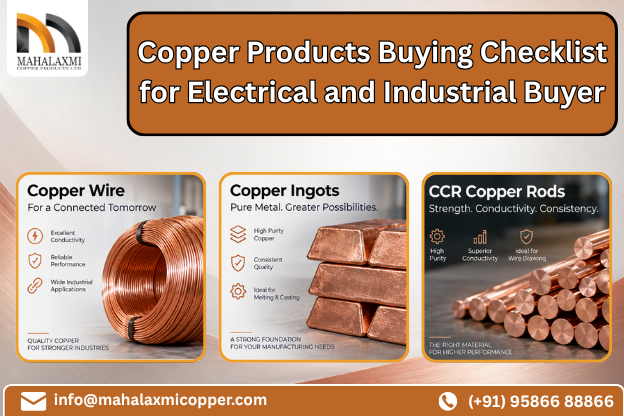
Solar projects involve more than modules, inverters and mounting structures. Electrical conductors, earthing systems, panels and downstream equipment also depend on carefully selected copper products. For procurement teams, choosing copper for solar projects means looking beyond price per kilogram. Buyers should define the application, dimensions, electrical requirements, quantity, applicable standard and delivery schedule before finalising an order.
Copper wire, CCR copper rod and copper bar may all serve the solar value chain, but they do not perform the same job. Understanding that difference helps EPC companies, panel builders, cable manufacturers and project developers avoid incorrect specifications and unnecessary material changes.
Why Copper Specifications Matter in Solar Projects
The correct copper form depends on where the material will be used. For example, solar project specifications may call for copper wire in earthing arrangements, while copper busbars can be used in junction boxes, panels or distribution equipment. Government solar tender documents have included copper earthing wire and copper busbar arrangements in these types of applications.
Therefore, procurement teams should work from approved drawings, BOQs and technical specifications rather than buying by product name alone. A clear specification makes supplier discussions easier and reduces the risk of ordering material that does not match the intended application.
Copper Wire for Solar ProjectsCopper Wire for Solar Projects
Copper wire for solar projects may be required for earthing, bonding, electrical connections or further cable manufacturing, depending on the design.
Before ordering, buyers should specify the required diameter or cross-sectional area, copper grade or material requirement, insulation requirement if applicable, quantity, packing form and intended application. In addition, the engineering team should confirm any conductivity, resistance, testing or documentation requirements.
However, raw copper wire and finished insulated solar cable are not the same procurement item. Therefore, enquiries should clearly state whether the buyer needs copper wire for further manufacturing or a finished conductor for site installation.
CCR Copper Rod for Solar Project Supply Chains
The term copper rod for solar projects needs careful interpretation. CCR copper rod generally works as an upstream raw material for wire production, electrical manufacturing and further copper processing. Mahalaxmi Copper also positions its CCR copper rods for wire production, electrical manufacturing and downstream industrial processing.
As a result, a solar cable manufacturer or electrical component producer may procure CCR copper rod as a production input. On the other hand, a solar EPC contractor may not purchase CCR rod directly for installation at the project site.
This difference matters during procurement because rod, wire and finished cable should not be treated as interchangeable products.
Copper Bar for Solar Projects
Copper bar for solar projects becomes relevant where a solid copper section is required for power distribution, electrical panels, busbar systems, earthing arrangements or equipment fabrication.
Mahalaxmi Copper lists electrical panels, busbar systems, power distribution, earthing and industrial fabrication among the applications associated with its copper bars.
Before procurement, buyers should define the required bar form, width, thickness or other dimensions, quantity and intended application. Moreover, drawings should identify machining, drilling or fabrication requirements where those details form part of the final component design.
Solar Project Copper Requirements to Discuss Before Procurement
A clear purchase enquiry helps suppliers understand the requirement accurately. Before requesting a final quotation, procurement teams should confirm:
- Product form: Copper wire, CCR copper rod, copper bar or another required copper product.
Application: Earthing, busbar, cable manufacturing, panel building, fabrication or another electrical use.
Dimensions: Diameter, cross-sectional area, width, thickness or drawing-based dimensions.
Material specification: Required copper grade, purity or conductivity requirement.
Applicable standard: Project specification, BIS standard or another specified standard where relevant.
Quantity and delivery: Total requirement, batch quantities and expected delivery schedule.
Documentation: Test reports, inspection documents or buyer-specific documentation requirements.
Packing and destination: Particularly important for bulk industrial and project-based procurement.
Mahalaxmi Copper similarly asks industrial buyers to share the required product, quantity, intended application, dimensions where applicable and delivery location while submitting an enquiry.
Common Copper Procurement Mistakes
One common mistake is comparing quotations only on price. However, a lower price offers little benefit if the material dimensions, product form or technical specification do not match the approved requirement.
Similarly, high conductivity copper for solar applications should not be treated as one universal material specification. Conductivity, grade and standard requirements depend on the final component and project design. Therefore, measurable requirements should come from the engineering specification wherever applicable.
Finally, engineering and procurement teams should align before bulk ordering. Even a small specification mismatch can become significant when repeated across a large commercial or utility-scale solar project.
A Better Approach to Copper Procurement for Solar EPC Projects
For copper procurement for solar EPC projects, begin with the approved BOQ, electrical drawings and technical specifications.
Next, classify each requirement according to product form and application. After that, prepare the supplier enquiry with dimensions, quantity, applicable standard, documentation requirements, packing details and delivery schedule.
Mahalaxmi Copper manufactures copper wire and CCR copper rods in Ahmedabad and supplies copper bars for electrical and industrial requirements. Buyers can discuss application-specific dimensions, quantities and technical requirements before order finalisation.
Conclusion
Successful copper procurement starts with clear specifications. Copper wire, CCR copper rod and copper bar can all support the solar industry, but each serves a different stage or application.
Therefore, buyers should define the product form, dimensions, technical requirements, quantity, documentation and delivery needs before discussing price.
For solar EPC companies, cable manufacturers, panel builders and renewable-energy buyers, this specification-first approach can reduce confusion and support more accurate supplier discussions.
FAQs
1. What copper products are commonly required for solar projects?
Copper requirements vary according to project design. Copper wire may be used for earthing, bonding or electrical connections, while copper bars can support busbar, panel and power-distribution applications. CCR copper rod is more commonly an upstream raw material for manufacturers producing wire and other electrical copper products.
2. What specifications should buyers provide when ordering copper for solar projects?
Buyers should provide the copper product type, intended application, dimensions, quantity, required material grade, applicable standard, conductivity requirement where relevant, documentation needs and delivery location. Providing approved drawings or technical specifications can also help the supplier understand the requirement more accurately.
3. Is CCR copper rod directly used in solar power plants?
Not necessarily. CCR copper rod is commonly used as raw material for wire production, electrical manufacturing and further copper processing. Therefore, solar cable or electrical component manufacturers may procure CCR rods, while an EPC contractor may instead purchase finished wires, cables or other components required at the project site.
4. What standard applies to copper rods and bars for electrical applications in India?
BIS lists IS 613:2000 for copper rods and bars for electrical purposes. It also lists IS 12444:2020 for copper wire rods used in electrical applications. However, procurement teams should always confirm the applicable standard, grade and testing requirements from their specific project documents.
5. How should solar EPC companies evaluate copper suppliers?
Solar EPC procurement teams should evaluate suppliers against the approved technical requirement rather than price alone. They should discuss product form, dimensions, material requirements, quantity, documentation, delivery schedule and applicable standards. Clear technical communication before ordering can reduce specification mismatches and improve the overall procurement process.
