


Copper Products Buying Checklist for Electrical and Industrial Buyer
Copper Products Buying Checklist for Electrical and Industrial Buyers
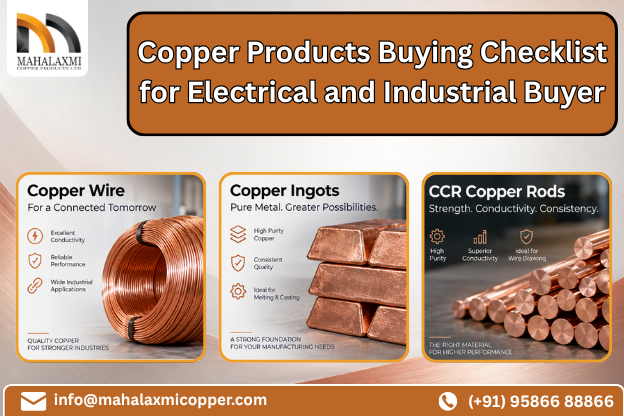
Buying copper for electrical or industrial use involves much more than comparing prices from different suppliers. The right material must match your technical specifications, production process, application and delivery schedule. Therefore, a practical Copper Products Buying Checklist can help procurement teams avoid quality issues, production delays and unnecessary costs.
Whether you are purchasing copper wire for electrical manufacturing, CCR copper rods for further processing, copper bars for power-distribution equipment or copper ingots for manufacturing, every order should begin with clearly defined requirements.
1. Start With the Exact Copper Product You Need
For example, copper wire may be required for electrical equipment, motors, transformers or industrial manufacturing. Meanwhile, CCR copper rods may serve as raw material for further wire processing. Copper bars are commonly considered for electrical panels, busbar systems, power-distribution equipment and fabrication requirements.
Mahalaxmi Copper handles requirements for copper wire, CCR copper rods, copper bars, copper ingots and copper scrap for different electrical and industrial applications.
Choosing the correct product at the beginning prevents unnecessary discussions and makes quotation comparison easier.
2. Define Grade, Purity and Technical Requirements
Copper may look similar visually, but its suitability depends on the required grade and technical properties.
Therefore, never send a purchase enquiry that simply says, “We need copper.” Instead, specify the grade, purity or material requirement provided by your engineering team. For electrical applications, conductivity may also be an important consideration.
For example, specifications such as ASTM B49 cover certain high-conductivity copper rods intended for further fabrication into electrical conductors. However, the applicable standard should always be selected according to your actual product design, customer requirement or engineering specification.
3. Confirm Dimensions and Tolerances
Therefore, your copper product selection guide should include all relevant measurements. Depending on the product, these may include diameter, width, thickness, length, weight or another required size.
For CCR copper rods, for instance, buyers should communicate the required rod diameter. Similarly, copper bar enquiries should include the required form and dimensions.
If your application has strict tolerances, mention them before requesting a final quotation. Moreover, attach an engineering drawing whenever dimensions are difficult to communicate through text alone.
4. Check Material Quality and Supporting Documentation
Instead, industrial buyers should determine what documentation they need with the material. Depending on your internal quality system and application, you may request relevant inspection information, test documentation, material details or specification confirmation.
Before placing a bulk order, clarify:
- Product grade, purity and required specifications
- Required dimensions and acceptable tolerances
- Applicable standard, drawing or technical requirement
- Required quantity and packaging format
- Inspection or testing documentation required by your company
- Intended electrical or industrial application
- Delivery location and required delivery schedule
- Commercial terms and quotation validity
This simple step makes the copper products buying guide far more useful for procurement teams because every supplier can quote against the same requirement.
5. Consider the End Application
For example, copper products for electrical industry applications may need particular attention to conductivity, dimensional consistency and processing requirements. On the other hand, copper purchased for fabrication may have different priorities related to size, machining, forming or production compatibility.
Therefore, tell the supplier your intended application whenever possible. A supplier who understands the application can discuss the requirement more accurately than one who receives only a product name and quantity.
6. Evaluate Batch Consistency for Regular Production
For an OEM or industrial manufacturer, one successful delivery is not enough. Regular production needs repeatable material.
Consequently, procurement managers should consider consistency across multiple orders, especially when copper feeds directly into a continuous production line.
If your company purchases copper regularly, communicate your recurring specifications clearly and keep an approved requirement sheet for future orders.
7. Review Packaging, Handling and Transportation
Even suitable copper can create problems if packaging and transportation do not match the product or delivery conditions.
For example, heavy industrial material needs practical handling arrangements at both dispatch and receiving locations. Furthermore, buyers should confirm quantity, packing method and delivery destination before finalising logistics.
For large orders, also discuss whether your facility has any unloading, storage or handling restrictions.
8. Do Not Compare Suppliers Only on Price
One of the most common purchasing mistakes is choosing the lowest quotation without comparing what is actually included.
A lower unit price may not provide better value if the material does not meet the required specifications, causes additional processing problems or arrives later than required.
Consider specification compliance, consistency, documentation, quantity, logistics, delivery commitment and communication along with price. As a result, your purchase decision reflects the total requirement rather than only the initial material cost.
9. Share Complete Information When Requesting a Quote
Before contacting a supplier, prepare your product name, grade or purity requirement, dimensions, quantity, application, applicable specification, documentation requirement and delivery location.
Mahalaxmi Copper also asks industrial buyers to provide product, quantity, application, dimensions where applicable and delivery location when sending copper product enquiries.
Final Thoughts
A reliable Copper Products Buying Checklist helps electrical and industrial buyers make technically informed purchasing decisions.
Start by identifying the correct product. Then confirm grade, purity, dimensions, tolerances, applicable specifications, quality documentation, quantity, packaging and delivery requirements. Moreover, evaluate the supplier based on consistency and suitability rather than price alone.
Mahalaxmi Copper, Ahmedabad, works with requirements for copper wire, CCR copper rods, copper bars, copper ingots, copper scrap and other industrial copper requirements. Buyers can share their quantity, technical specifications, intended application and delivery requirements with the team for further discussion.
FAQs
1. What should I check before buying copper products?
Before purchasing copper products, confirm the product type, required grade or purity, dimensions, tolerances, quantity, application and delivery location. Moreover, check whether your company requires specific testing, inspection documentation or compliance with a particular technical standard before placing the final order.
2. How do I select the right copper product for an electrical application?
Start with the electrical or engineering specification for your application. Consider the required product form, dimensions, conductivity requirements, grade and manufacturing process. For example, requirements for copper wire may differ significantly from those for CCR rods or copper bars used in power-distribution equipment.
3. What information should I send when requesting a copper quotation?
Provide the copper product name, required grade or purity, dimensions, quantity, intended application, applicable standard or drawing and delivery location. In addition, mention any testing, documentation, packaging or delivery requirements so the supplier can understand the complete requirement before preparing a quotation.
4. Why should industrial buyers avoid selecting copper only by price?
Price alone does not confirm whether copper meets your production requirements. Material that does not match the required specifications, dimensions or consistency may create processing problems or additional inspection costs. Therefore, industrial buyers should compare technical compliance, quality requirements, supply consistency and delivery terms together with price.
5. Which copper products are commonly required by industrial buyers?
Industrial requirements vary by application. Common products include copper wire, CCR copper rods, copper bars, copper ingots and copper scrap. Electrical manufacturers, engineering companies, OEMs, fabricators and other industrial buyers should select the product according to their technical specifications and manufacturing process.
