h1-bg

Premium WordPress theme for construction companies, contractors, builders, and a variety of other construction-related businesses.

  • 28238 Kelsie Lane Apt. 451,

    Port Annabelport

  • 8.00am - 10.00pm

    (Sat - Thursday)

  • Indsrop@gmail.com

    (10am - 05 pm)

Why Copper Bars Are Essential for Electrical and Industrial Applications

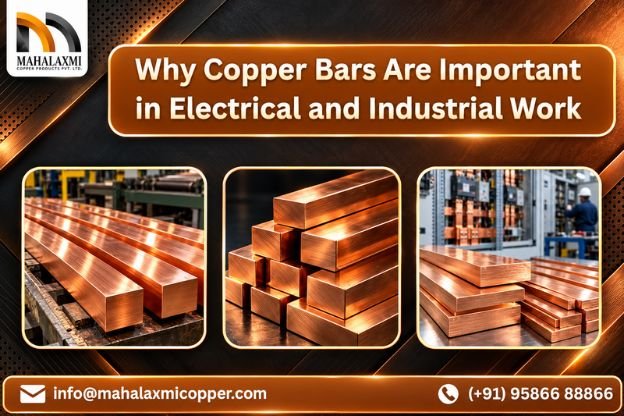
Why Copper Bars Are Important in Electrical and Industrial Work
Systems rely on reliable materials to carry power safely and efficiently. Whether you are building an industrial control panel installing a transformer or managing a manufacturing facility picking the right conductor matters a lot.
Copper Bars are widely used in these tasks because they provide electrical conductivity, strength and reliable performance. In addition Copper Bars are useful for engineers, contractors and industrial manufacturers because they can be used in many ways.

What Are Copper Bars and Why Are They Used?

Copper Bars are copper items that come in many shapes, such as rectangular, square and flat. Manufacturers and fabricators use Copper Bars to make connections, busbars, industrial parts and equipment that distributes power.
Unlike copper wires Copper Bars give a stiff conductor that can hold organized electrical connections. Their shape also makes them good for panels where space, current capacity and mechanical steadiness are important.

Key Benefits of Copper Bars in Electrical and Industrial Applications

Understanding the benefits of Copper Bars helps engineers and buyers pick materials that keep systems running over time.

1. Good Electrical Conductivity

Copper moves electricity well making it good for tasks that carry amounts of current. Because of this designed Copper Bars can lower power loss and help distribute energy efficiently. In panels and industrial machines this benefit is especially useful where equipment runs all the time.

2. Good Thermal Conductivity

Electrical connections make heat when current passes through them. Much heat can hurt parts and lower system reliability. Copper moves heat well helping spread heat from hot spots.
Still choosing the size of Copper Bars giving good ventilation and making sure connections are tight are still needed to keep temperatures in check.

3. Strength and Long Service Life

Copper Bars give a mix of strength, flexibility and resistance to corrosion. So Copper Bars work well in assemblies that need steady connections and reliable performance.
When engineers choose the size and how to install Copper Bars they can keep them working for many years with proper care.

4. Easy Fabrication and Customisation

Another benefit of Copper Bars is how easy they are to work with. Fabricators can cut, bend, drill and machine Copper Bars to fit installation needs. For example panel makers often need Copper Bars with holes that are in precise places for bolted electrical connections.

Major Applications of Copper Bars in Different Industries

Industrial Copper Bars support electrical, manufacturing and engineering tasks.

Copper Bars for Electrical Applications

Copper Bars for Electrical Applications are often used in panels, distribution boards, switchgear and control gear. Copper Bars give paths for electricity and link different parts inside an electrical assembly. Also Copper Bars are good for custom panel designs where stiff connections are preferred.

Copper Busbars for Power Distribution

Copper Busbars for Power Distribution are parts in industrial electrical systems. Copper Bars spread power among transformers, switchgear, circuit breakers and other gear. For example a factory might use copper busbars inside a distribution panel to feed several production sections.
However engineers must calculate the needed size of Copper Bars based on temperature rise, fault situations and how they are installed.

Transformers and Electrical Equipment

Copper Bars and flats are also used in transformer connections and some electrical equipment assemblies. Copper Bars conductivity and flexibility make them useful for connecting terminals and moving current between parts.
Also accurately made Copper Bars can help equipment makers keep assembly specs.

Industrial. Fabrication

Beyond electrical panels Copper Bars act as raw materials for made parts, connectors, terminals and special engineering uses. For example industrial fabricators may machine Copper Bars into custom parts for machines.
Likewise equipment makers use Copper Bars when they need conductivity, heat performance or precise size.

Energy and Infrastructure

Solar setups, energy‑storage systems and other power infrastructure might use copper busbars in electrical distribution. As energy needs grow manufacturers need reliable conducting materials, for complex systems.
Thus Copper Bars keep playing a role in today’s electrical infrastructure.

How to Choose the Right Copper Bars for Industrial Use

Buying Copper Bars is not about looking at the price. I see that procurement teams must check how well the Copper Bars fit the job, how consistent the Copper Barsre how dependable the supplier is.

Common Mistakes to Avoid When Buying Copper Bars

Sometimes buyers look at the lowest price and forget to check the technical needs of Copper Bars.
That approach can make fabrication cost more delay installation or cause the Copper Bars to perform badly.
Common mistakes include:
  • Selecting the width or thickness for Copper Bars.
  • Ignoring the required copper grade or conductivity for Copper Bars.
  • Purchasing without confirming dimensional tolerances for Copper Bars.
  • Overlooking surface damage and connection requirements for Copper Bars.
  • Failing to confirm testing, documentation and delivery terms for Copper Bars.
To stop these problems I tell buyers to give their suppliers drawings and product specifications for Copper Bars.

Why Choose Mahalaxmi Copper for Copper Bar Requirements?

Mahalaxmi Copper Products Ltd., in Ahmedabad, Gujarat works with customers who need Copper Bars for electrical, fabrication and power‑distribution projects.
The company sells Copper Bars, copper wire, CCR copper rods, copper ingots and copper scrap.

Frequently Asked Questions

1. What are copper bars mainly used for?
Copper bars are commonly used in electrical panels, busbar systems, switchgear, transformers, power-distribution equipment, and industrial fabrication. Their excellent electrical conductivity makes them suitable for transferring current efficiently.
Copper bars are widely preferred because copper provides high electrical conductivity, good thermal performance, and useful mechanical strength. These properties make it suitable for many electrical systems. Furthermore, copper can be fabricated into precise shapes and sizes, allowing engineers to develop compact, stable, and efficient electrical connections.
Copper bars are solid copper products that can serve as raw material or finished components. A copper busbar is specifically designed to collect or distribute electrical current within a system. Therefore, a copper bar can function as a busbar when its dimensions, connections, electrical rating, and installation meet the application’s technical requirements.
Selecting the correct copper bar size requires evaluating operating current, allowable temperature rise, short-circuit withstand requirements, installation conditions, and applicable electrical standards. Engineers should also consider conductor spacing and connection design.
Mahalaxmi Copper Products Ltd. supplies copper bars for electrical, power-distribution, fabrication, and industrial requirements from Ahmedabad, Gujarat. Buyers can contact the company with their required bar dimensions, quantity, intended application, and delivery location.
Mahalaxmi Copper Products LTD Logo

Mahalaxmi Copper Products Ltd. is a copper products company based in Ahmedabad, Gujarat. We manufacture copper ingots and handle enquiries for copper wire, CCR rods, copper bars and copper scrap for electrical and industrial applications.

Copyright © 2024 mahalaxmi copper | Made by uvdigitalsolution